
Six men have been arrested in Israel after allegedly looting in an ancient cistern nine metres below ground, using heavy excavation equipment. The suspects were caught during an operation by inspectors from the Israel Antiquities Authority’s Robbery Prevention Unit at Horbat Adash, an archaeological site near Mevo Beitar in the Judean Hills.

According to the investigators, the group had brought a generator, an electric jackhammer, augers, digging tools, a long ladder and lighting equipment to the site. While some of the men were allegedly working inside the cistern, the others remained above ground beside a lit campfire, apparently trying to make their presence look like an ordinary picnic.

An ancient cistern turned into a refuse pit
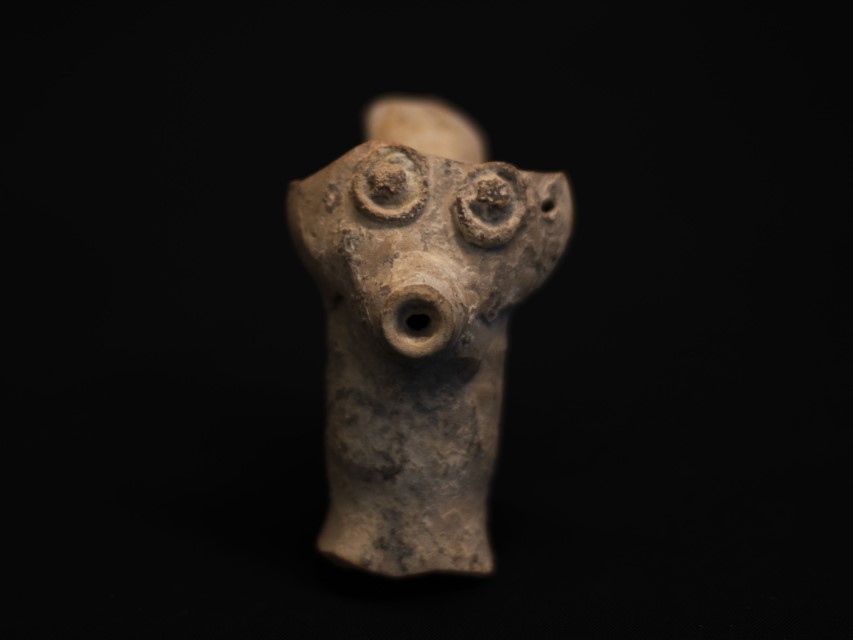
Inside the structure, inspectors found a substantial quantity of archaeological material, including fragments from hundreds of pottery vessels, several stone vessels and part of a zoomorphic vessel, whose neck was shaped like an animal. The latter dates to the Early Islamic period.

The variety of finds suggests that the cistern eventually fell out of use as a water reservoir and was subsequently repurposed as a refuse pit. The objects recovered therefore represent different phases in the history of the settlement.
Horbat Adash is a designated archaeological site containing the remains of an ancient settlement occupied for almost a thousand years, from the Second Temple period in the 1st century BCE to the Early Islamic period in the 8th century CE.

Previous excavations have uncovered a public ritual purification bath carved into the rock, with two entrances, as well as building remains, water systems and industrial installations. An Early Islamic public building identified as a mosque has also been discovered.
An ancient cistern turned into a refuse pit
Inside the structure, inspectors found a substantial quantity of archaeological material, including fragments from hundreds of pottery vessels, several stone vessels and part of a zoomorphic vessel, whose neck was shaped like an animal. The latter dates to the Early Islamic period.
The variety of finds suggests that the cistern eventually fell out of use as a water reservoir and was subsequently repurposed as a refuse pit. The objects recovered therefore represent different phases in the history of the settlement.
Horbat Adash is a designated archaeological site containing the remains of an ancient settlement occupied for almost a thousand years, from the Second Temple period in the 1st century BCE to the Early Islamic period in the 8th century CE.
Previous excavations have uncovered a public ritual purification bath carved into the rock, with two entrances, as well as building remains, water systems and industrial installations. An Early Islamic public building identified as a mosque has also been discovered.
Irreversible damage to the archaeological remains
The illegal excavation caused extensive damage both around the cistern and inside it. Its walls and floor were damaged, and ancient plaster layers that had survived in place for centuries were broken. The Israel Antiquities Authority believes the suspects may have been searching for a hidden treasure.

The six men were arrested on suspicion of damaging an archaeological site, an offence punishable under Israeli law by up to five years in prison. They were taken to a police station for questioning. Once the investigation is complete, the case will be forwarded to the prosecution service, which will consider whether to bring charges.
Dr Amir Ganor, head of the Israel Antiquities Authority’s Robbery Prevention Unit, warned that stories circulating on social media about treasures supposedly hidden at archaeological sites are encouraging unauthorised excavations. Such activities, he explained, destroy archaeological layers and separate artefacts from their original context, permanently erasing information that could help researchers reconstruct the past.
Israel’s Minister of Heritage, Rabbi Amichai Eliyahu, also condemned the incident, stressing that archaeological sites are part of the country’s shared cultural heritage and must be protected from looting and destruction.
📘 Source ✅
- 📄 IAA – Israel Antiquities Authority
Questo contenuto è protetto da marcatura temporale decentralizzata. L’impronta digitale del testo è registrata per garantirne l’integrità e la data certa di pubblicazione.
Data di pubblicazione registrata: 18/11/2026 10:01
Verificabile in conformità con i protocolli internazionali di informazione certificata OpenTimestamps.